
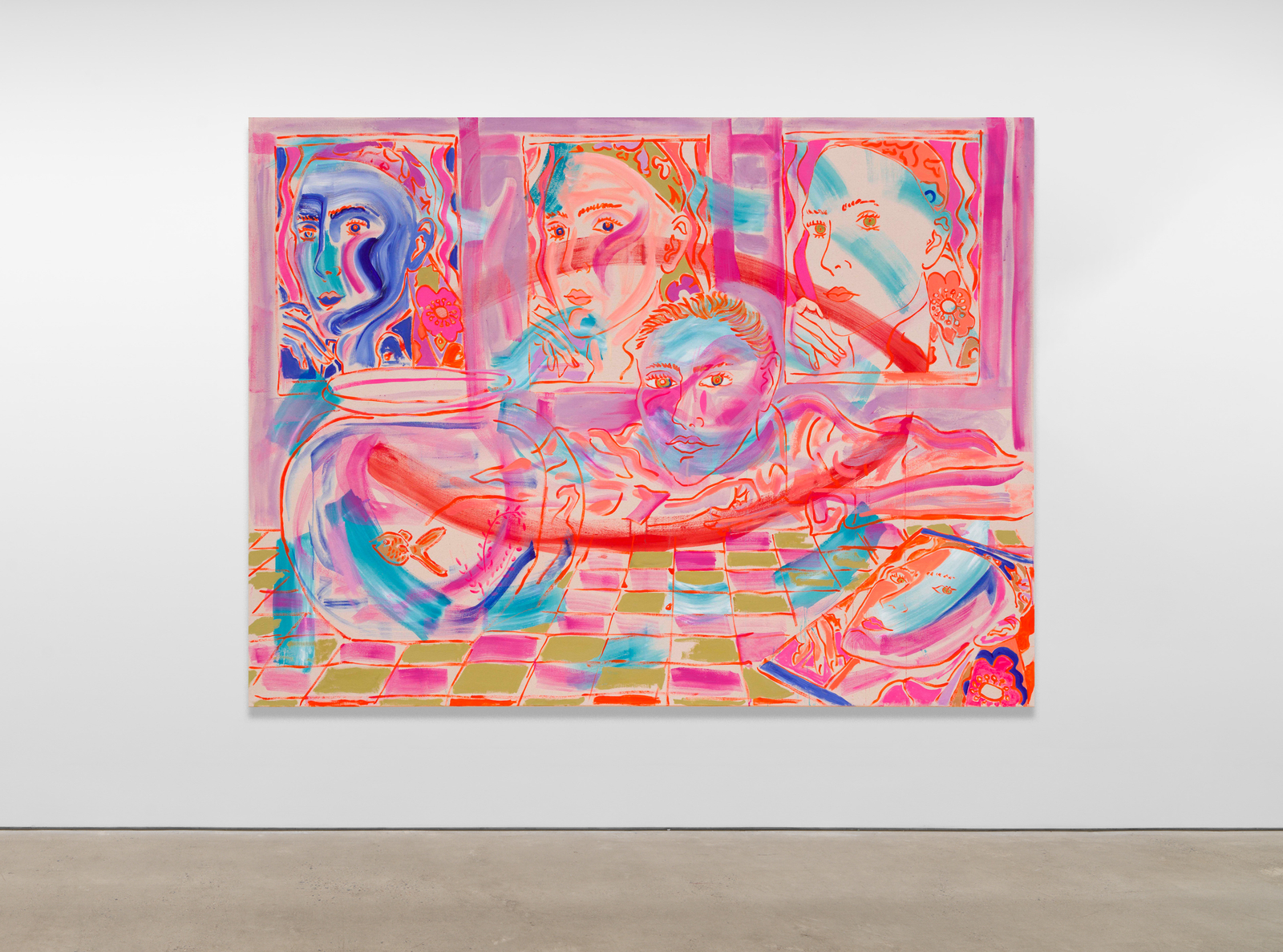
Garth Greenan Gallery is delighted to announce representation of Heidi Howard. A lifelong resident of Queens, New York, Howard is an artist celebrated for their intimate portraits, plein-air botanicals, and whimsical, pattern-filled still lifes. This spring, Garth Greenan Gallery will host an invitation-only performance with the artist in anticipation of the gallery’s relocation to SoHo this September.
Howard’s portraiture emerges from a unique choreography of the studio encounter. To prepare for a session, Howard will first spend time one-on-one with their sitter, sometimes over months or years. During this period, the artist develops an impression of that individual’s personality and shared aesthetic predilections. At the studio, Howard creates a welcoming environment, painting swiftly and responsively, and always serving a home-cooked dinner at the session’s conclusion. This interaction—defined by conviviality, reciprocity, and nourishment—pointedly reimagines the historically loaded, sometimes-exploitative dynamic between painter and model.
Howard grew up steeped in New York’s creative firmament. The daughter of avant-garde composer Earl Howard and installation artist Liz Phillips (a frequent collaborator), Howard learned to see art, art-making, and art institutions as integral to community and family life. For Howard, painting is inextricably tied to rhythms of the everyday, part of a continuum of gestures, habits, and domestic experiences. Improvisation is at the core of their work. Loose brushwork, dancelike gesture, and a fully embodied expression reveal a debt to female painters such as Joan Mitchell and Helen Frankenthaler, while a Day-Glo palette, Les Nabis patterning, and embrace of irresolution and accident show a highly personal interpretation of the broader history of modernist painting. Taken together, Howard’s subjects—many of them artists—register a cross-section of New York’s creative world. In this regard, Howard’s artworks are a road map to a particular orientation, perspective, and place.
Since the completion of a large-scale mural project at the Queens Museum in 2018–20 (made with Phillips), Howard has turned increasingly toward paintings of plants and flowers. In these works, luscious, bold colors, and broad, sweeping line coalesce into ravishing, brilliantly hued statements about form and color. As in their portraiture, Howard works quickly and loosely, responding in real time to subtle movements of a leaf or petal as the painting unfolds. This ethic of engagement points to a sense that for art to matter it must be indistinguishable from life: porous, reciprocal, and constantly in motion.